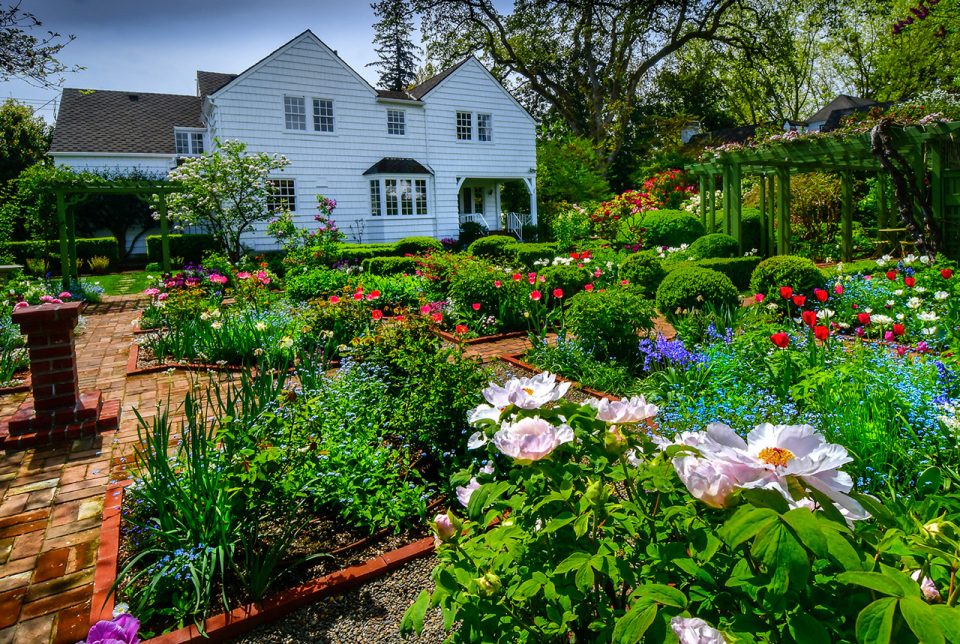
The rain has lightened up and the tulips are starting to hit the peak bloom this week. The replication of Elizabeth and Edith’s 1956 bulb planting plan makes for a spectacular show!
Tulipa ‘Caravalle’
The Tulips are starting to hit the peak at Gaiety Hollow this week.
Finally a spring day with some soul warming sunshine! 75 degrees in the garden today felt amazing! I took a brief walk around and snapped a few photo’s of the beautiful pre easter day.
Tulipa clusiana var. chrysantha ‘Tubergens Gem’
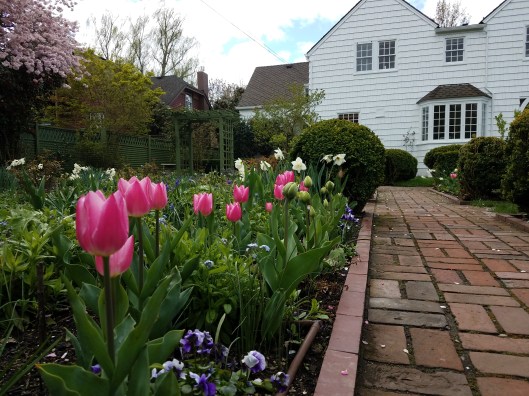
The Teahouse Garden Tulips are just about to hit peak bloom right in time for easter
Deep reds look so good on the glistening white of the outbuildings at
Tulipa ‘Foxtrot’ does a great job of foiling Tulipa ‘Rosalie’
May 5th, 1942. It was a Tuesday. On that day in History, the US began rationing sugar during World War II. In Tremont, Mississippi, Tammy Wynette was born. She would go on to record some great hits with “the Possum” George Jones and become known as the first lady of Country music.
And on that day in 1942, Elizabeth and Edith bought 5 distinct cultivars of Camellia, from the purchase records: May 5th 1942:
Camellia alba plena
Camellia Cheerful (Chandler)
Camellia ‘Francine’
Camellia ‘Kumasaka’
Camellia ‘Purity’
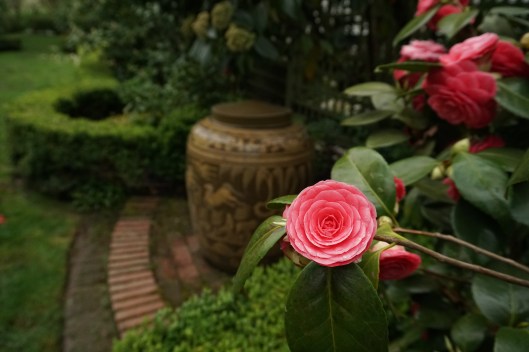
The Camellia Collection of Lord and Schryver is still going strong, while we have some work to figure out what all the old names are, it’s a spring pleasure to enjoy the hard contrast of the shades of White, Pink and Red set so strongly on the dark green background of the evergreen foliage.
This is one of my favorites in the Garden, the Double dark pink under the oak tree in the West Entry, it’s probably the most well behaved of the collection, only dropping a few flowers at a time. Which makes it a favorite of the gardener, because you don’t have to clean up a 100 lbs of spent blossoms every morning!
Spring Marches on
The Urn from the Pergola with the dark red blossoms of Magnolia on the brick.
Thursdays are Deepwood days and some fun projects are underway! Besides the usual planting of the teahouse garden, the great room has had some new flower additions this spring. We also replaced a historic Malus ‘Firebird’ Crabapple in the Scroll garden.
The Teahouse Garden is looking splendid with the early season tulips, and the trade mark Lord and Schryver Forget-me-nots providing the foil for the spring bulbs.
Thanks to a generous donor the Lower Terrace renovation project is underway! This photo shows after the removal of the patio pavers that were crumbling away. The project is getting the steps redone, a new pathway surface to prevent erosion, the patio relaid, and the historic arbor rebuilt. The Lord and Schryver drawing hanging at Gaiety Hollow shows the arbor with Clematis on the West side and a canopy of Lilacs with Peonies underneath. Stay tuned for updates on this wonderful restoration taking place.
We are so fortunate that Edith and Elizabeth kept amazing records of the Bulb Plantings they did at Gaiety Hollow.
This is the layout of the 1935 planting plan, and while many of those old varieties are no longer available, we do have the ability to make comparisons to modern selections and essentially recreate the garden at a point in time.
Tulipa ‘Yosemite’
The bulb planting plan for this season was based on the drawings from a 1956, the old cultivar of Tulip on the drawing, which was a cultivar from 1944 called Tulipa ‘Wilhelm Tell’, which interesting enough, got translated onto the planting plan as William Tell, is no longer available a similar rose colored selection was made and Tulipa ‘Yosemite’ does an outstanding job of shining above the brick.
Tulipa ‘Christmas Dream’
On the walk through the drying yard, Tulipa ‘Christmas Dream’ is a stand in for the 1956 choice of Tulipa ‘Pink Perfection’, which I couldn’t find a good reference to in the volumes that have been written on old tulips, there is mention of ‘Perfection’ and also a ‘Purple Perfection’.
It’s been buckets of rain here in the first week of April, with the Willamette River set to crest at a tiny bit below flood stage in Salem, but spilling it’s banks througout much of the Valley. Lot’s of the modern breeding work in tulips was done to produce strong stems that can stand up to the torrential downpours of April.
The blog is back! I’m Mark the new Garden Manager/Curator for the Lord and Schryver Conservancy and I’m excited to share this lovely garden with you.
The Parterre Garden at Gaiety Hollow in Early April
Flower Bulbs are my Jam and this Narcissus ‘Marieke’ by the reflecting pool is stunning!
The reflecting pool on an overcast April Day, the Pieris, Camellia’s, Daffodils and Anemone are starting to add more color everyday.
“In the spring, I have counted 136 different kinds of weather inside of 24 hours.”
— Mark Twain
That Mark Twain quote can’t be more appropriate for an Oregon Spring, Sun, rain, showers, hail you never know what you are going to get. This week the weather is lining up a bit grey and damp.
Last week, we hosted a group of gardeners to learn about invasive bugs and slugs. The presentation is part of a series of enrichment activities for our Gaiety Hollow and Deepwood garden volunteers. However, we decided to open the presentation to a wider audience. Come Friday morning, we had cozy mixed group of our Conservancy garden volunteers as well as gardeners from Deepwood, Friends of Bush Gardens, and the Bug Group from the Marion County Master Gardeners. It was nice to see new faces at Gaiety Hollow and introduce them to the Lord & Schryver legacy.
Jim Labonte and Tom Valente, entomologists from the Oregon Department of Agriculture (DOA), led us through a lively presentation on pests in our gardens and parks. They also talked about threats–those looming on the horizon or knocking on our door.
Global trade is a wonderful thing, but it carries a terrible price in the form of damaging, invasive, exotic species,” LaBonte says. “It’s directly related to volume. The more you ship in, the greater the chance of getting something you don’t want.
Gardeners tend to share plants. We are learning the hard way that we are also sharing pests.
A hot topic was Japanese beetles. If you have lived in the Midwest or East Coast, you know the destruction caused by Japanese beetles. They seem to eat everything. Grapes. Hops. Cannabis. Roses. We do not want them in Oregon!
Turns out, they are already in western Portland. The Department of Agriculture is undertaking a huge suppression program this spring. They are trying to eradicate the beetles before it is too late.
Don’t move plants with soil from the Portland area. (Japanese beetle eggs or larva may be in the soil.)
Don’t bring plants from the Midwest or East Coast with soil. If you order plants, they must be bare root.
Watch for damage in your own yard and alert the DOA immediately if you think you have the beetles.
We were also warned about the “Asian jumping worm“. Why should we be worried about this worm? It is such a good composter that it is destroying our soil structure and throwing off the natural system of our forests. It eats through the leaf litter so quickly that our native species of bugs and small mammals are losing their homes and food sources. Native trees and shrubs do not germinate as well in the new compost and it can cause erosion because the compost is easily washed away by rainfall.
This worm is already in the Salem area, but you can help stop its spread by not moving garden soil or compost.
Wash soil off of plant roots before you give them away.
If you receive plants from a friend or buy at a local plant sale, put down a sheet of plastic, clean off the soil, and put it in the trash.
Don’t put potentially contaminated soil in the compost–it probably won’t get hot enough to kill the worms or eggs.
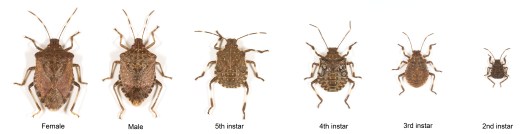
You’ve probably seen it wandering around your house in the fall. It also eats everything. The good news is that a parasitic wasp that attacks the stink bug’s eggs has found its way into the United States. We don’t know if the wasp will hurt other bugs, but at the moment it seems like good news to those of us who don’t like stink bugs.
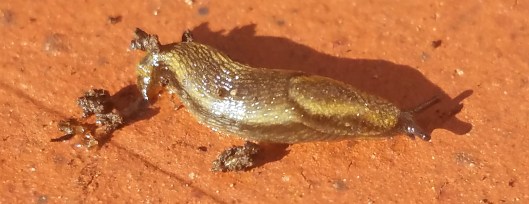
Other good news. All those slugs in your garden? They are also invasive. You may squish them with impunity. If you don’t have the stomach for squishing, dropping them into a bucket of soapy water works as well.
The main take away from our gathering is the role of gardeners in both introducing or excluding invasive insects and other pests to our environment. We can either be the source of a new pest in Oregon or we can be the person who spots the signs of a threat and alerts the DOA. Keep your eyes open as you care for your garden, walk through the neighborhood, or stroll through a park.
Need an ID? The Dept. of Ag. is there to help you. You can send in photos online for identification. If you are lucky enough to live in Salem, you can also stop by the department in person.
Many, many thanks to both Tom Valente and Jim LaBonte for speaking to our group of gardeners! And thanks to everyone who joined us for a fun and educational morning.
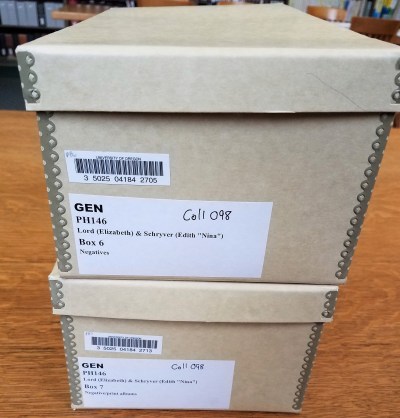
Yesterday, I made a trip down to the Special Collections & University Archives at the University of Oregon. Lord & Schryver’s business papers, photographs, and other miscellaneous items, are stored in the Special Collections. Over the years, our volunteers have made many trips to the Special Collections to find information about Lord & Schryver’s garden designs and to better understand their style and plant choices. Thanks to our volunteers, we have many copies of Lord & Schryver’s materials at Gaiety Hollow.
I am in the process of writing plans for the restoration of the gardens as a whole, and each garden “room” within the whole. Another visit was in order. I was particularly interested in seeing two boxes of film negatives. It had been years since a volunteer had looked at them and I wanted to see them for myself.
Visiting the Special Collections feels a bit like going on a treasure hunt. Not everything has been cataloged. We keep turning up new bits of information in obscure places.
For example, I found a recipe for French dressing stuffed in an envelope of negatives.
I was very excited to find a couple negatives of what looks to be the putto from Gaiety Hollow. We have been wondering what is his story. Based on these negatives, I’m guessing that Elizabeth found him in Italy and brought him back to Salem. I’m hoping that looking through other records will turn up an invoice or receipt for the purchase of the putto. (My apologies for the poor photo quality–these are negatives on a lightbox.)
Putto in birdbath
Putto, back right
Another great find was a negative of a poster that Lord & Schryver submitted as part of a design contest by the magazine House Beautiful. I had heard about this image before, but had not yet seen it. The “legend” at the bottom confirms what volunteers had suspected–that the Pergola and grape vine, Parterre Garden, and several flowering trees, were remnants of the Elizabeth Lord’s mother’s garden. Seeing that the piece of land which became the allee with the two oak trees as not included in the designs, I gather that this contest submission was created in the early 1930s. The image of their living room, in the top right, and its description in the legend add insights into their taste and style.
Contest poster
Legend
I also found a smattering of new-to-us images of Edith meeting with clients. It’s nice to see images that humanize Edith and Elizabeth and show their professional and personal characters.
Edith, right, with clients
I look forward to retrieving more information from Special Collections in the coming months and sharing it with you. If any readers have old photographs of Lord & Schryver or gardens they designed, we would love to see them!
HISTORIC PHOTOGRAPHS COURTESY OF THE LORD & SCHRYVER ARCHITECTURAL RECORDS, COLL 098, BOXES 6 AND 7, SPECIAL COLLECTIONS AND UNIVERSITY ARCHIVES, UNIVERSITY OF OREGON LIBRARIES, EUGENE, OREGON.
Is it winter or is it spring? This weather has me totally confused. I thought I had at least a month to sit in my office and write, but the sunshine these past few days has me anxiously staring at the hellebores and daffodils in bud. Should I drop everything and garden?
My answer to that is Yes, but judiciously.
There are lots of simple tasks that can be done in the garden in January that will save you from insanity in March. Why not tackle them on sunny days? Here’s what we’ll be doing at Gaiety Hollow in the next month.
Removing the leaves from hellebores (so that flowers are visible)
Cut leaves
Before
After
Trimming leaves from Epimedium (so that flowers will be visible)
Cleaning up the herbaceous perennials left standing over the winter (like peonies or phlox)
Composting perennials no longer up to snuff
Transplanting self-sown hardy annuals (like forget-me-nots and violas)
Forget-me-not
Viola
Top dress with compost
Now is also a good time to look at the structure of your deciduous trees and shrubs. Look for dead branches, crossing branches, and branches that are growing towards the center of the plant. Call an arborist now and get on their work schedule. If you plan to do it yourself, make notes, take pictures, or tie tape on branches you plan to remove later in the season.
Don’t get too hasty on pruning! I am very tempted to start pruning our overgrown boxwood, but I have been warned that it is better to wait until February. Roses are another plant you might have an urge to cut. Don’t do it. Severe cold weather–like we had around this time last year–could damage or kill recently pruned plants. It’s not worth the risk.
To prevent soil compaction, limit the amount you walk in flower beds and grass. Put down sheets of plywood if you must walk on ground that is soggy. Is the ground too wet and you don’t have plywood? Sounds like the perfect excuse to go inside and have a cup of tea.
What about all of those rainy days coming up? Stay inside and dream big dreams for your garden! It’s time to order seeds and spring planted bulbs, like Dahlia, Canna, and Gladiolus. Don’t forget to purchase seed starting supplies and new tools while you are at it. You can use this calendar to help know when to start your seeds (Salem’s average last frost date is 5/22).
Need some inspiration? There are so many wonderful books on gardening to get you started. I recently picked up Clyde Waschsberger’s gardening memoir and loved it. What’s your favorite garden related book? Or which gardening book are you reading now?
After a two week break and a trip back to the frozen tundra of Michigan, I am back at Gaiety Hollow and Deepwood.
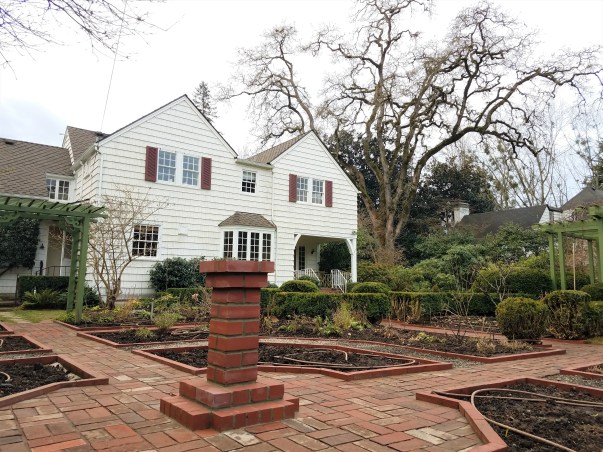
Earlier this week, contractors finished building the pedestal at the center of the Parterre Garden at Gaiety Hollow. It is beautiful!
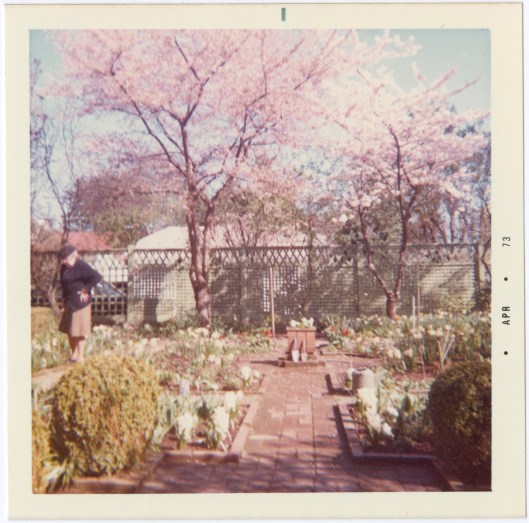
We don’t know why the pedestal was removed or when it came down. Our last photo of it was taken in 1969. Photos from 1973 show that it had been replaced by a pot.
And where, oh where, did the dear putto go? We have no clues as to where he ended up. We think he was cast in bronze and measured 18-24 inches tall. Our earliest images of him are from glass slides taken c. 1930.
He may have come from the Lord family garden. We have lots of eyes looking for a suitable replacement, but as of yet none have turned up.
I am thrilled by the attention to detail that the mason, Julian, gave the pedestal. After showing him pictures, he made sure to line up the mortar joints as they were historically.
Many thanks to our grant partners, the Oregon Cultural Trust and the State Historic Preservation Office, and to our donors, for their support of the brick walks project.
What else is going at Gaiety Hollow and the Conservancy?
Our winter flowers are beginning to bloom. Visitors might notice the scents of Sarcococca and Viburnum x bodnantense near the kitchen porch. Those who venture into the West Allee will find an early-blooming Camellia japonica. Primroses are blooming in the Evergreen Garden, hellebores are in bud, and I can see spring bulbs beginning to push up their greenery in the Parterre Garden.
Meanwhile, we have a new class of docents being trained to lead guided tours of both Gaiety Hollow and Deepwood. Volunteer gardener enrichment programs will take place in late January and February. Plans are underway for a film screening at Salem Cinema in March (more details to come!). And the Treatment Plan for the restoration of the garden is being written.















 Lord & Schryver Conservancy blog