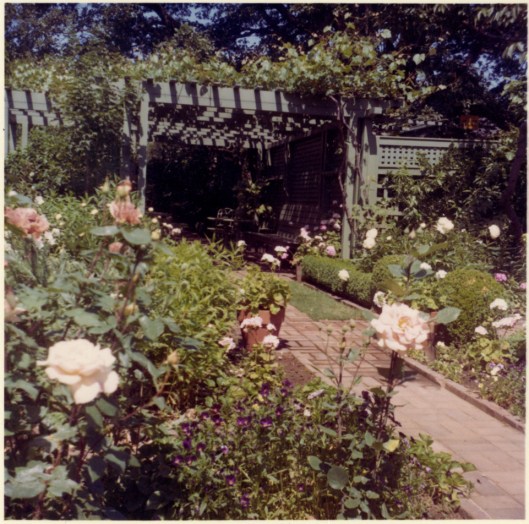
Update: Brick walks

Tags

, , , , , , , ,

It has been more than a month since I last posted about our brick walk restoration project. They are not finished, but we hope to have them completed by the end of this week. I should note that we have concentrated our efforts on the paths in and around the Parterre Garden (sometimes called the Flower Garden) because they were in an obvious state of disrepair.

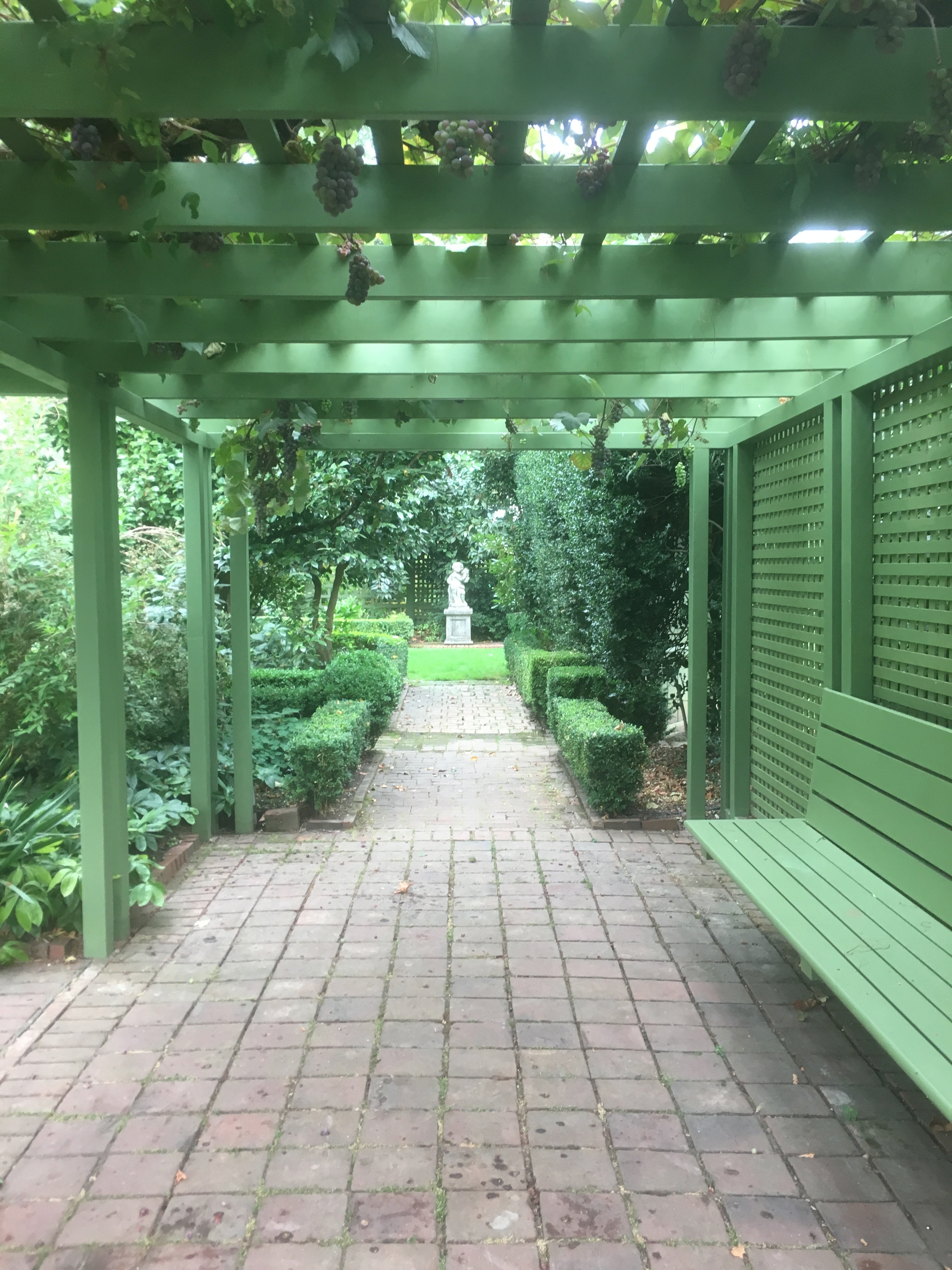
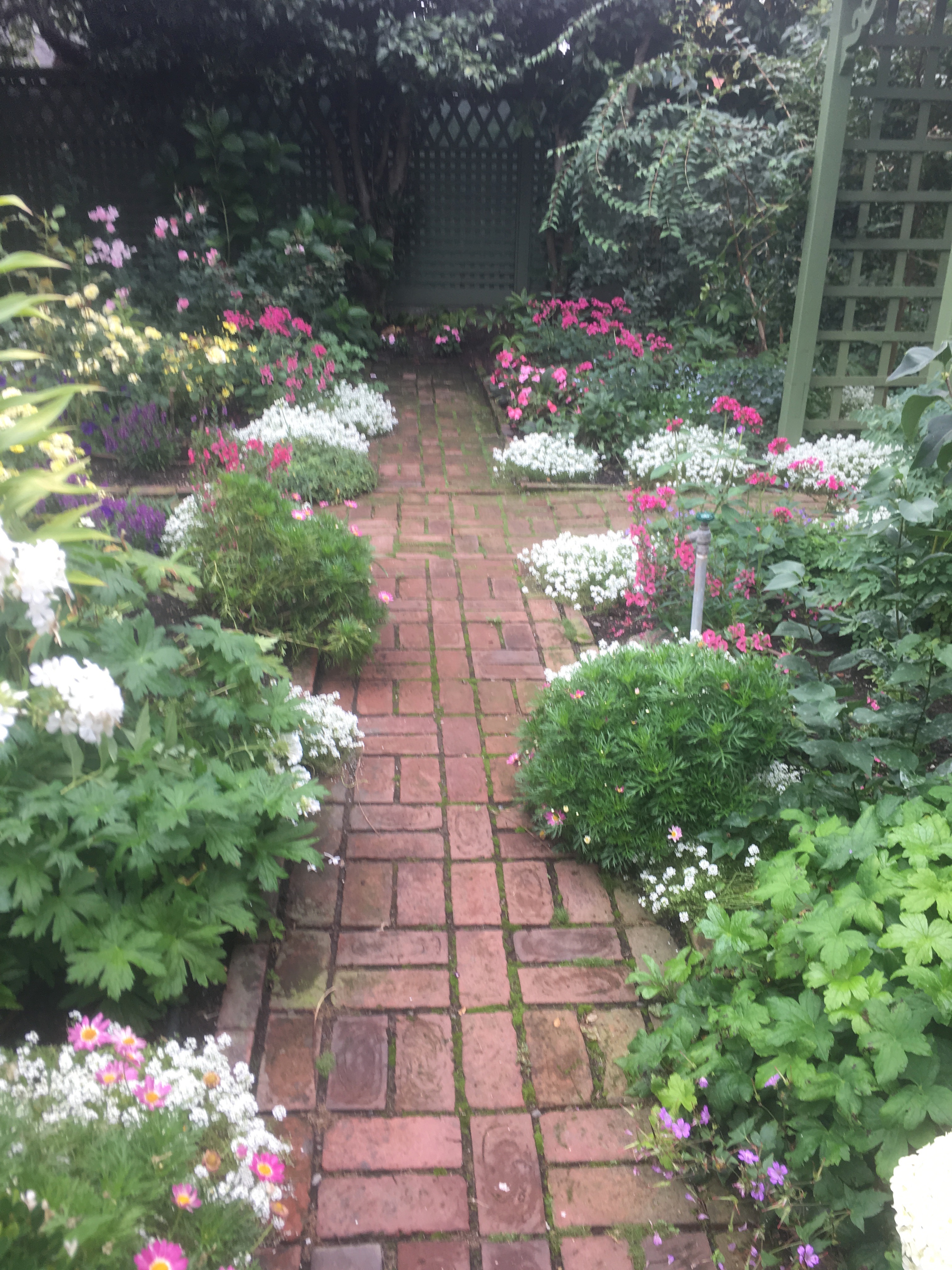
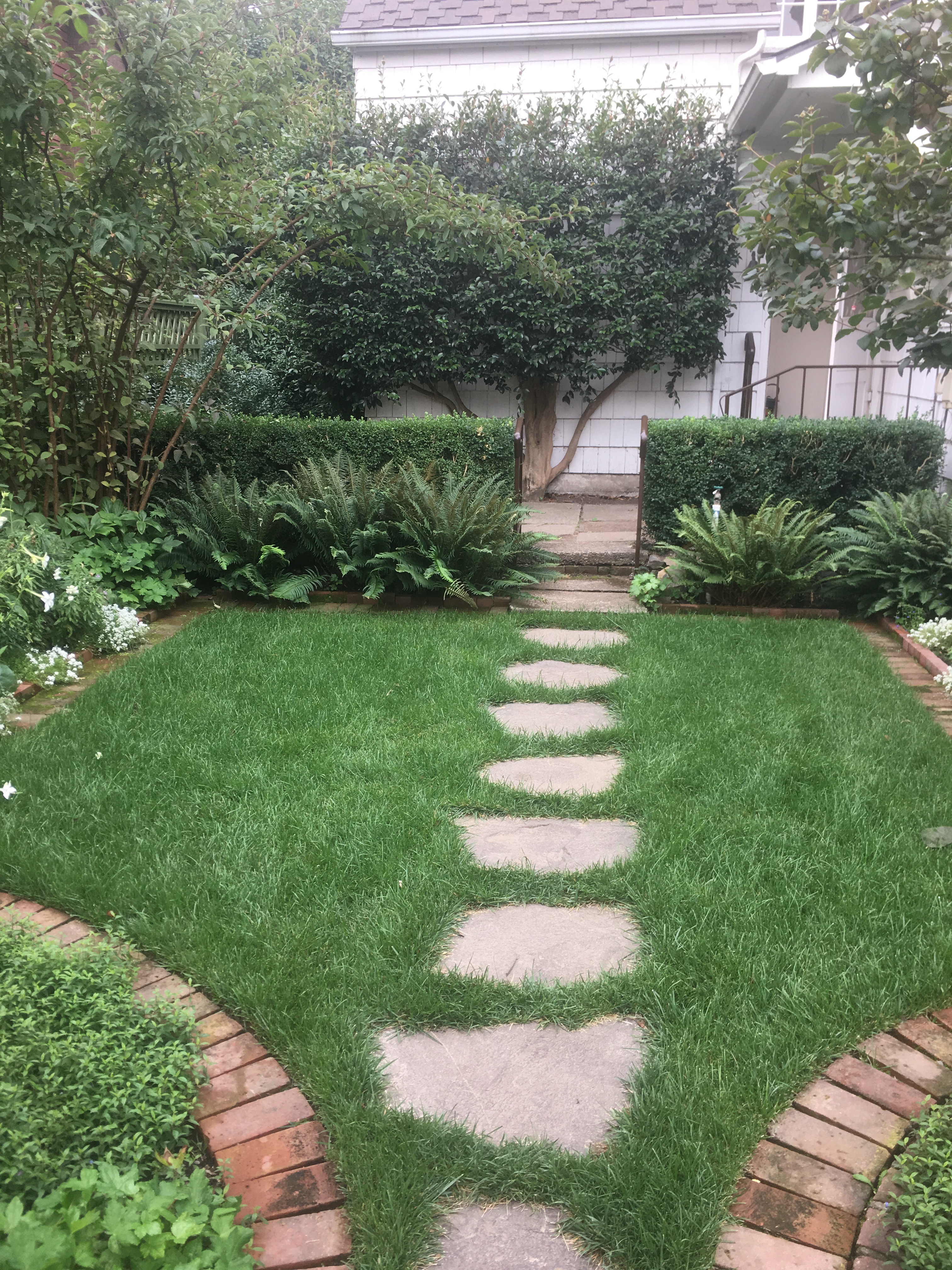
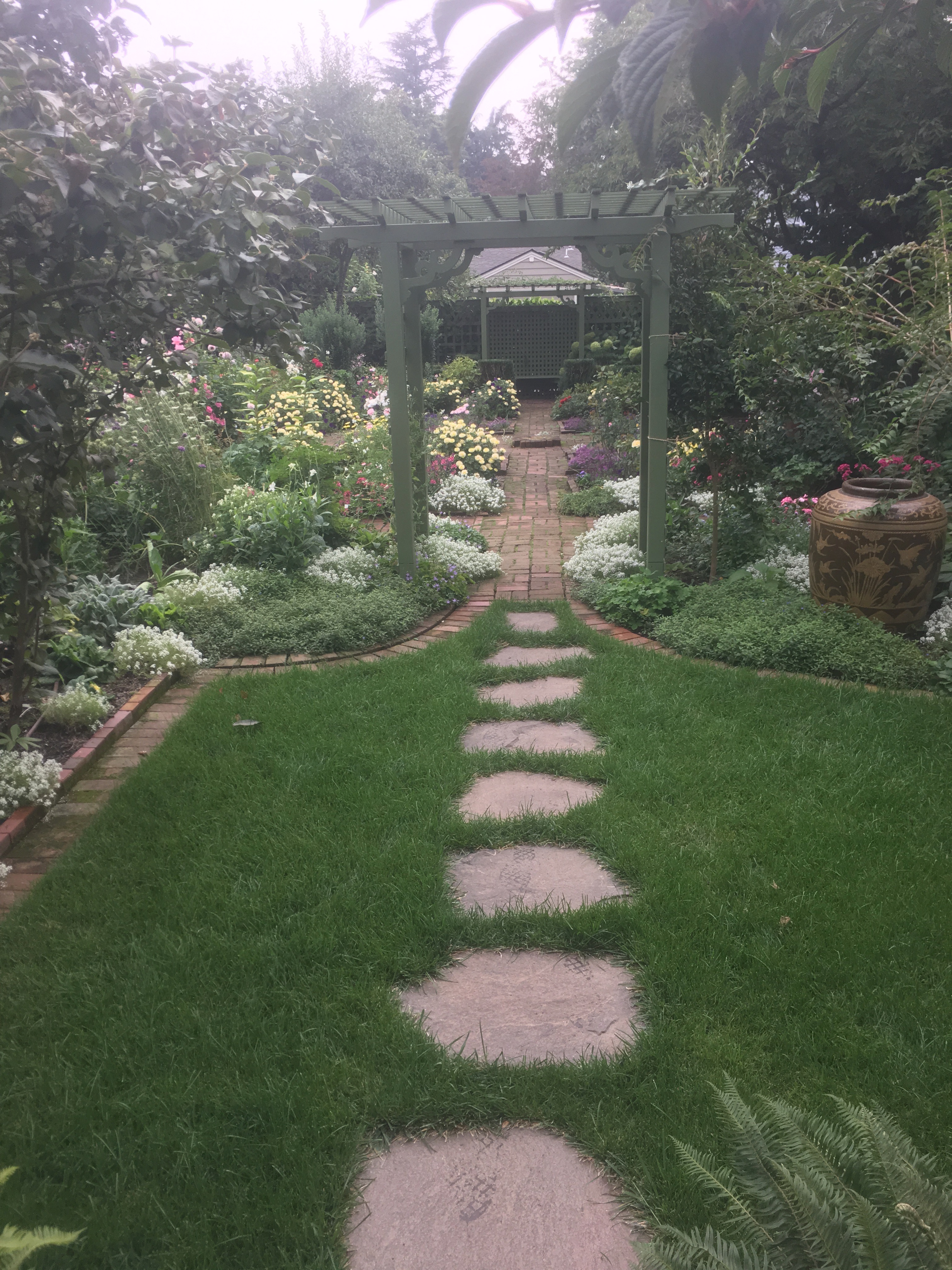
Returning visitors to Gaiety Hollow will immediately notice how much better the walks look and feel under your feet. They are now straight and level. The bricks that edge the path are all new and give the paths a crisp, clean look.

We aren’t completely clear on the history of the brick paths. There is speculation that parts of the paths were originally part of Elizabeth Lord’s mother’s garden. The modes Lord house was located at the corner of High Street and Mission Street, but the property encompassed approximately 1/4 of the city block. Juliet Lord was well known for her extensive flower gardens and Elizabeth credited her mother for teaching her to love gardens. Undated hand-colored lantern slides show the Gaiety Hollow property, but we are uncertain if they are of Juliet Lord’s gardens or Edith and Elizabeth’s gardens.

Undated; the Parterre Garden, looking north

We can say, however, that the paths were constructed by the early 1930s. Edith and Elizabeth moved into the Gaiety Hollow house in 1932. Dated photographs and plans from the 1930s show the layout of the paths.

Early plan for Gaiety Hollow

In the intervening 85 yeas, the paths fell into disrepair. Between the untold number of enthusiastic gardeners who have trod these paths, and the countless wheelbarrows of compost rolling over them, and seasons of freezing and thawing, many bricks had sunken, shifted, and broken. We discovered that a few of the paths had been redone during the intervening years and set in concrete mortar. Those paths we left as-is. Other paths were set on sand and gravel and had severely degraded. A laser level indicated that they were 2 inches lower than the paths on mortar!

When we took on this project, we decided that we wanted to restore the paths to how Edith and Elizabeth knew them. Visitors will feel like they have stepped back in time to the years Edith and Elizabeth were living and working at Gaiety Hollow (1932-1969).

This slideshow requires JavaScript.

There are changes that will be new to visitors, but they would not be new to Edith and Elizabeth. We have chosen to reconstruct the brick pedestal that stood at the intersection of the Parterre Garden until 1970. We removed the wide brick path leading to the Pergola and replaced the narrow path and grass strips that were there until around 1970. We also removed the degrading pavers in the north path and replaced them with grass that we can see in an early photograph and plan.

We did elect to make a few changes: We raised the grade of some of the paths slightly to improve drainage and all the bricks along the path edges were replaced. Visitors should not notice the grade change. The new bricks fit well with the old, but visitors will perceive that they are newer and it will create an opportunity for us to explain the garden’s story.

This slideshow requires JavaScript.

When you visit the gardens next season, you might notice a few quirks in the paths and the patterns of the bricks. Someone repairing the paths years ago must have made a few changes. We replaced the bricks exactly as they were (to the consternation of mason Julian).

All in all, the Parterre Garden has been restored to its original beauty. Visitors will be able to clearly see Edith and Elizabeth’s vision for the garden and the geometry of the design.

A small group of dedicated volunteers planted our spring blooming bulbs last week (Thank you!) and I am making plans for the perennials that we will plant in the spring. I hope that you visit us in 2018 and enjoy the progress we are making.


Many thanks to our grant partners, the Oregon Cultural Trust and the State Historic Preservation Office, to our donors, and to our volunteers, for making this project possible.

HISTORIC PHOTOGRAPHS AND PLANS COURTESY OF THE LORD & SCHRYVER ARCHITECTURAL RECORDS, COLL 098, SPECIAL COLLECTIONS AND UNIVERSITY ARCHIVES, UNIVERSITY OF OREGON LIBRARIES, EUGENE, OREGON.


Hated weeds, take 3

Tags

, , , , , ,

Last week, I asked What might be called “the scourge of Gaiety Hollow”? It was less than 12 hours before someone guessed correctly:

Aegopodium podagraria

Also known as ground elder, bishop’s weed, gout weed, snow-on-the-mountain, English masterwort, and many indecent names that a gardener calls it in a fit of fury.

There are two varieties of Aegopodium. One has green leaves; the other has variegated white/green leaves. In my experience, they are equally aggressive. They both bloom in the summer a rather unremarkable umbel-shaped flower similar to Queen Anne’s lace. This late in the season, Aegopodium is still lush and green.

20171114_105527_copy

Covering the base of a Hydrangea

Portland includes it on its Nuisance Plant List. Although it is considered less aggressive than many other plants in native ecosystems, it is extremely aggressive in a garden setting and (almost) impossible to get rid of. Volunteers have spent countless hours pulling it out of the plant beds at Gaiety Hollow and yet it keeps coming back. Its roots are well entwined with the boxwood hedges making complete eradication unlikely, but we can at very least keep it from getting out of control again.

20171114_143744

Mother plant on the left. A new plant growing from the rhizomes to the right.

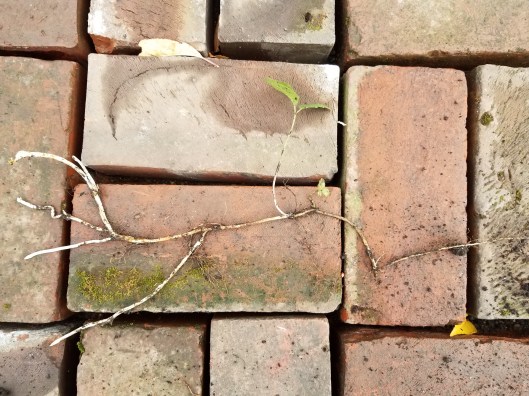
If you have Aegopodium in you garden, I would advise you to remove it as quickly as possible. Most likely you will not get all of it out. A fragment of its white rhizomes left underground will regrow. Even if you think that you like it, begin removing it now to keep it under control.

Like the other weeds I have mentioned, digging seems the best way to go in a garden setting. I dig with a shovel or trowel and follow the roots through the garden bed, gently pulling the plants and roots as I go. I try not to break the plants and feel very satisfied if I can pull up roots more than a foot long at a time. If it is growing into the roots of a perennial, I face the choice of bare-rooting the perennial or pitching it altogether.

20171114_144249

Another example of how the plant spreads by underground “runners” (rhizomes)

However, if you have a large patch of Aegopodium with no other desirable broadleaf plants mixed in, applications of an herbicide might take down the population. Always read the label on herbicides to make sure that you are applying the right product, at the right amount, in the most opportune conditions.

20171117_101617_copy

Aegopodium in Dahlias

Can you see the white Aegopodium root extending to the left? It is growing straight through this clump of Dahlia tubers. I planted the Dahlia earlier this year as a single tuber, so the Aegopodium has grown over 2 feet in one season. I will have to divide this group of tubers to remove the Aegopodium. I don’t want to risk accidentally re-planting the Aegopodium come spring. Constant vigilance is key! Again, a fragment of root left alive will regrow and quickly begin taking over.

I have many other hated weeds, but these are our biggest challenges at both Gaiety Hollow and the historic gardens at Deepwood. What is your least favorite weed?

We are very grateful for the many hours of labor our dedicated volunteers have put into removing these weeds. The gardens would be a jungle without their help. 


Hated weeds, take 2

Tags

, , , , ,

Last week, I left you all with a cliff-hanger. What is this weed that I loath?

Campanula rapunculoides

Campanula rapunculoides

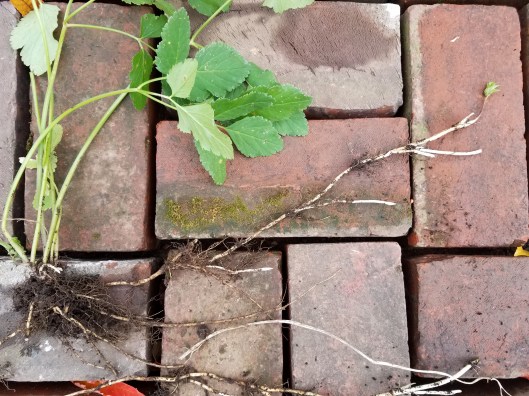
This is Campanula rapunculoides aka creeping bellflower or rampion bellflower. It is native to Europe and Eurasia and was brought here as an ornamental garden plant. However, it quickly takes over a garden and makes it look messy and weedy. Over time, it will choke out favorite plants.

20171120_154523

Flowers

Like the Arum that I wrote about last week, C. rapunculoides has underground root structures that make it difficult to eradicate. Pulling the leaves will not remove the roots. A few surface roots will come up but, little do you know, 6 inches to a foot below the surface lurk large, fleshy, white tuber-like roots that hold energy to regenerate the plant.

campanula rapunculoides roots

Roots with top growth and leaves

To get rid of the plant, you must remove all of the underground root structures. C. rapunculoides is resistant to some herbicides. Other herbicides must be applied more than once to fully kill the plants. In a garden setting, where C. rapunculoides likes to grow inside your perennial, it can be very difficult to apply an herbicide effectively.

Digging it out seems to be the only way to remove it in a garden. I have resorted to digging up perennials–like the peony in the photo above–and sorting out the roots before replanting. Undoubtedly, I have missed a few roots and constant vigilance is demanded to prevent it from taking over again.

C. rapunculoides

Hiding in the Phlox at Deepwood

When it is impossible to dig out the roots, like when it is growing in a boxwood hedge, the top growth can be pulled or an herbicide dabbed on. If the leaves and stems are removed as soon as they appear, eventually the roots will be depleted of energy and die. Always read the label of herbicides and do some basic research before applying to make sure that C. rapunculoides is susceptible and that conditions are favorable for the most impact. Remove all flowers before they spread their thousands of seeds to the wind.

20171120_154544

Growing in a calla lily

I want to stress that this plant is not classified as invasive in Oregon. However, it is an nuisance in the garden and one of the plants I am working hardest to eradicate. It is listed as invasive in other states.

I also want to point out that not all Campanula are evil. Lord & Schryver loved their Campanula medium, Canterbury bells, and so do I. They are lovely annual or biennial plants that die after flowering. They have no fleshy underground roots or runners to carry them to other places in your garden. There are many other Campanula species and cultivars sold in the nursery trade. Below are three different kinds of Campanula we grow at Gaiety Hollow and Deepwood.


Next week, we’ll cover one more weed. It  might be called “the scourge of Gaiety Hollow.” Can you guess what it is?


Our Top Most Hated Weeds

Tags

, , , , , , ,

Right now is the perfect time to tackle some of our most noxious garden weeds. At Gaiety Hollow, our problem weeds have underground energy storage systems that require them to be dug out.

Fall is a great time to remove these weeds for three reasons:

  • After the annuals have been removed and perennial plants have died back, it’s easier to see weeds.
  • The moisture in the late fall soil makes it easier to dig and do a thorough job of removal.
  • Some weeds are dormant in the summer and re-emerge at this time.

Which weeds plague us the most? I’ll cover our top three nemeses in the next two weeks. First up:

20161220_150545

Arum italicum

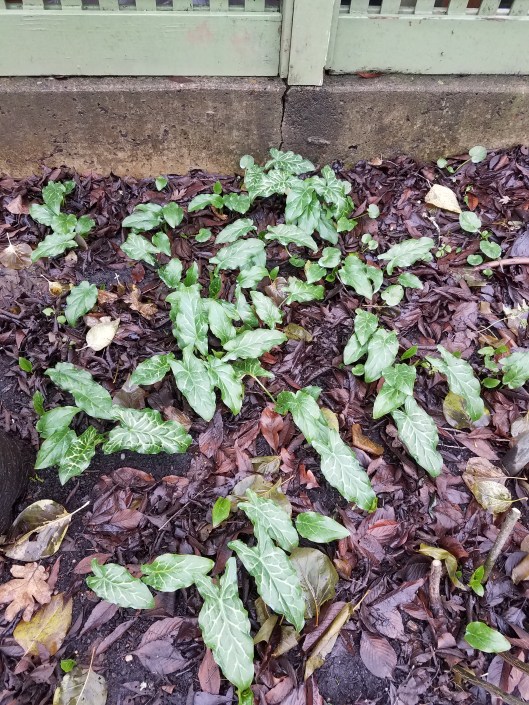
Arum italicum shows up at this time of year. Its glossy green, arrow-shaped leaves pop up through the garden soil after months of dormancy. In late spring, it flowers, a white-green spadix and spathe reminiscent of a calla lily or peace lily. In late summer, the fruit is red-orange and ornamental. Once you see the pretty green leaves in late autumn and the bright fruit, you understand why someone would grow it as an ornamental. On the other hand, once you see it taking over your shade garden, you will understand why I loath it.

Arum italicum

In a garden setting, it seems the only way to remove it is by digging. The leaf has a waxy coating that makes it almost impenetrable by herbicides. Pulling the leaves does not remove the the root structure below the ground–a corm–which stores energy so that if the leaf dies, it can regrow.

Digging seems to be the only way to take down the numbers, BUT you must do it right or you will end up with more plants.

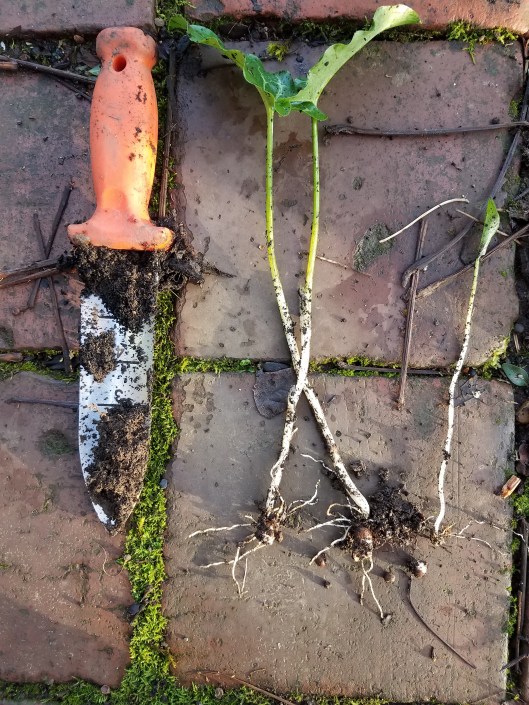
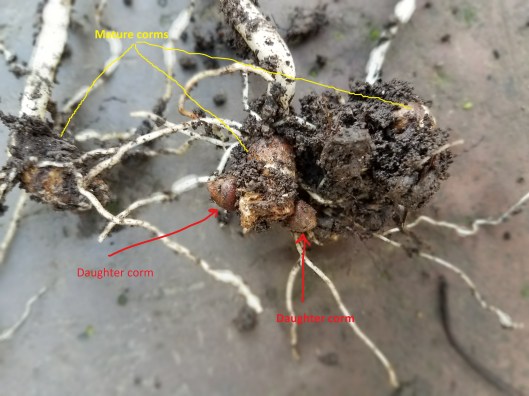
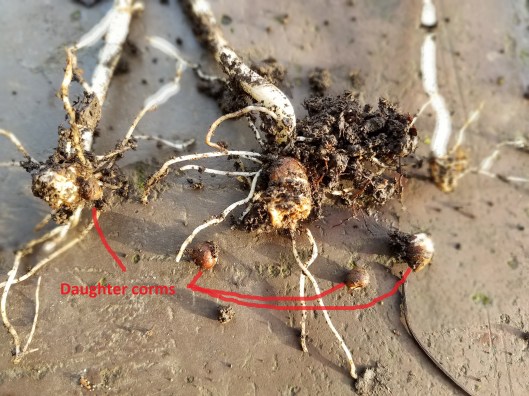
When you dig Arum you have to be very careful. Go deep. As you lift a clump out of the ground, you will notice that there is a corm at the bottom of the leaf. Looking more closely, you may notice many, many more tiny brown daughter corms attached to the large corm (they look almost like a nut). If any one of these falls off, it becomes a new plant. This is the reason why some people say that digging Arum only produces more plants.

20161220_150933

My recommendation? Dig out Arum in clumps, put the corms and attached dirt directly into a garbage bag, tie the bag, and dispose of it in the garbage. You do not want to put the corms in compost (it will not get hot enough to kill the corms). Don’t try removing the dirt from the clump; you will unwittingly spread the minuscule daughter tubers. All of it should go in the trash.

20161220_150613

Corms disguised by dirt. Can you see the brown “daughter” corm in the center?

Inked20161220_150640_LI

arum corms

Unfortunately, you are not going to get out all the corms your first year tackling Arum. This is a multi-year eradication project. I’m on year two at Gaiety Hollow.

My second recommendation? Buy a new house with no Arum in the yard.

I’m only half kidding!

Whatever you do, do not introduce this plant to your garden. If you have Arum in your yard, assume that any plant you dig up could be contaminated and do not give it away to unsuspecting friends.

More information from the City of Portland and the National Park Service.

Next week, this little terror.

20171114_105451


Update: Brick walks

Tags

, ,

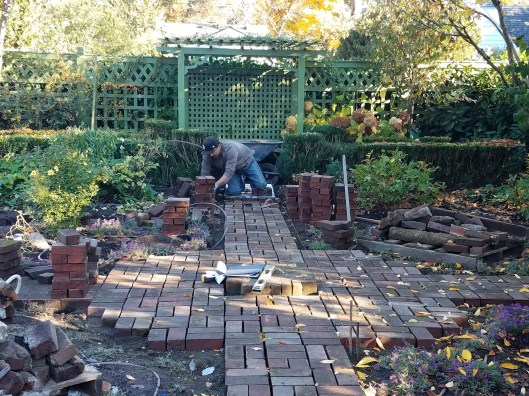
The brick walk project is well underway! We are so thrilled to see the paths coming back together. The Autumn Leaf crew has been onsite for the past week and will continue work this week.

Before work commenced, I took over ninety photographs of the paths. Julian, foreman for this project, has them all printed out so that he can re-create the paths exactly as they were. He has found a few quirks that I had not noticed, like a course of cut bricks near the middle of a path. We have no records other than photographs to help us understand how the paths evolved over time. There are many days I wish Elizabeth had written something in her journal about bricks! Perhaps the paths were Edith’s forte.

We are making a few subtle improvements to the paths as we go forward. Pooling water was frequently a problem, so we have elected to gently raise the grade of some of the paths to increase drainage. We are re-using the old bricks as the walking surface throughout the Parterre Garden (Flower Garden). The brick borders will be completely replaced with new bricks. This will provide visual consistency and be easy for docents to  interpret. New bricks will also make up the path that leads to the Pergola.

20171030_101237

Julian at work this morning

As soon as the bricks are finished, we will start planting spring blooming bulbs. We’re already looking forward to our first Open Garden in March 2018!

Progress on the brick paths

Tags

, , , , , , ,

If you haven’t been to Gaiety Hollow in the past week, you might not recognize the Flower Garden!

Last Wednesday evening, Dave Hiser brought his youth group from the The Church of Jesus Christ of Latter-day Saints in South Salem to Gaiety Hollow. Racing against the setting sun, 25 energetic youth and 5 adult supervisors pulled up the brick paths, scraped off sand and mud, and stacked the bricks on pallets. The north path made of crumbling pavers and concrete was demolished with a sledgehammer and is heading to the landfill.

They finished the evening with zucchini bread, long drinks of cold water, and a group photo on the lawn.

20170927_194413_crop

Thanks to these wonderful volunteers, the brick walks in the Flower Garden are almost ready for a make-over.

On Friday, our garden volunteers joined the efforts. Undeterred by rain, they cleaned up rubble, knocked out edging bricks, discovered more bricks hidden under an old path, and smoothed paths for walking. Pruning the boxwood away from the bricks elicited excitement from some, groans from others, and lots of jokes.

20170929_113127


There are still a few preparations to be done before our contractors come in–removing the short path going to the shed, taking out the edges of the paths–but we should be ready by early next week. The historic bricks are being saved so that masons can reuse them in the paths and retain the feeling of charm so integral to the gardens.

20170928_081912

When this construction is complete, the Flower Garden should look as Edith and Elizabeth intended it. Smooth paths. Clean edges in straight lines. No more pooling water. The pedestal and putto as the central focal point. Grass in the north path. Grass and a brick path to the Pergola. The geometry and bones that Edith and Elizabeth so purposefully laid out will be restored.

Words of caution: If you are visiting the garden as a volunteer or for a meeting during October, please approach Gaiety Hollow from Mission Street to avoid walking through the construction zone in the back gardens and to avoid interrupting our contractors when they are onsite. We want all of our visitors to be safe while at Gaiety Hollow. Thank you!

Changes are afoot at Gaiety Hollow

Tags

, , , , , , , ,

This weekend are the last tours of the 2017 season. We have a garden tour at Deepwood Museum & Gardens at 9am. It is followed by a tour of the gardens at Gaiety Hollow at 10:30am. This is your last opportunity to see the Flower Garden at Gaiety Hollow before big changes take place!

20170921_134256

Come Monday morning, I will be in the garden digging (almost) everything up. The annuals will go to the great compost pile in the sky and the perennials and roses will find new homes with our volunteers. By Wednesday, the Flower Garden will look like a blank slate.

Wednesday evening, we are welcoming a crew of youth from the LDS church in south Salem. They will pull up the bricks from the paths in the Flower Garden, clean them, and stack them. I am so grateful to have their offer of help!

The following week, our contractor will come in with his crew and work will commence on the rehabilitation of the brick pathways. If you have been to Gaiety Hollow this season, you know that the paths are uneven, water pools in various sections, and the edging brick is spawling in places or leaning right and left.

September in the Flower Garden

When you come back to the gardens next spring, this will no longer be the case! We cannot wait to have the paths fixed so that they look as they did when Edith and Elizabeth gardened at Gaiety Hollow. The bricks will be clean, the path lines sharp and crisp, the pedestal at the center of the garden reconstructed, and grass will be reintroduced in two sections (including the path to the Pergola).

It is a very exciting time for the Lord & Schryver Conservancy. Many thanks to our grant partners, the Oregon Cultural Trust and the State Historic Preservation Office, to our donors, and to our volunteers, for making this project possible.

One Last Open House

Tags

, , , , , ,

I had a meeting at the house this morning so I snuck in the back gate a little early to see the garden…gorgeous even on an overcast and smoky morning…the last open house of the season is coming up this Sunday the 10th, $5 each for adults…545 Mission Street starting at 10:00 a.m….you won’t be sorry.  The zinnias are beautiful and so is everything else!  Come walk through for a summer memory.

Historic roses at Gaiety Hollow

Tags

, , , , , ,

Earlier this week, I had an epiphany as I looked at historic plans in our organization archives. Years ago, volunteers had Edith and Elizabeth’s hand-drawn plans for the gardens at Gaiety Hollow digitized. I have copies on my computer and refer to them often while doing research and planning. There is a sketch that I have often skipped over because I did not see it as particularly relevant.
ND plan with shrubs coll96_lordschpapers_0020

I had overlooked this drawing because it features a Vitex and Lonicera hedges that were never planted.

However, this week, I had a realization that the information written in the four inner flower beds might be very useful. We know from photographs that Edith and Elizabeth planted these beds with roses–roses that have long since disappeared.

So why could this sketch not tell me which roses Edith and Elizabeth preferred?

With the power of the internet, it didn’t take me long to generate a complete list of the roses on this plan, their type, their colors, and their year of introduction. And they match with our historic photographs.

  • ‘Butterfly’ (aka ‘Golden Butterfly’). Apricot yellow. 1920
  • ‘Sunburst’. Yellow-orange. 1911
  • ‘Constance.’ Golden yellow. 1915
  • ‘Los Angeles.’ Salmon. 1916
  • ‘Augusta Victoria’ (aka ‘Kaiserin Auguste Viktoria’). White, yellow center. 1911
  • ‘Mrs. Aaron Ward.’ Yellow blend. 1907
  • ‘Imperial Potentate.’ Carmine pink. 1921
  • ‘Lady Ashtown.’ Pink. 1904
  • ‘Duchess of Wellington.’ Yellow. 1909
  • ‘Mme. Edouard Herriot.’ Coral-red. 1912
  • ‘Golden Ophelia.’ Medium yellow. 1918
  • Mabel Morse. Golden yellow. 1922

It seems like an easy step forward for us to replant exactly what Edith and Elizabeth specified on this drawing. But historic preservation is never easy! We have no records that indicate these exact roses were ever installed. At the same time, we know that Edith and Elizabeth were critical of their gardens and flowers, frequently tossing out plants that did not meet their high standards. Perhaps these roses were planted in 1932 and then went into the compost heap within the next few years. We may never know. In addition, sourcing old roses can be difficult, as roses frequently drop out of trade as new cultivars are introduced. We might not be able to find these roses for purchase in the USA.

970 nd_roses with brick walk and arbor

Roses in the Flower Garden. Date unknown.

Nevertheless, I am excited about my discovery! The colors match our collection of historic photographs. I will use this list of roses to inform the type and color palette of the roses that I choose to plant in the coming year.

IMG_20170701_091828_027

‘Gruss an Coburg’ purchased by L&S for Deepwood

Many, many thanks to our volunteers who spent countless hours in the University of Oregon archives finding these scraps of information and paving the way for the restoration of the gardens.

Photographs and plans courtesy of the Lord & Schryver architectural records, Coll 098, Special Collections and University Archives, University of Oregon Libraries, Eugene, Oregon.


August anticipation

Tags

, , , , , , , , , , ,

August is a month of activity at Gaiety Hollow. A month of welcoming visitors and a month of preparations and anticipation for major projects.

On the 5th, we welcomed our neighbors in Gaiety Hill to an evening in the garden. A highlight of the event was Chinese lanterns collected by by volunteer Valerie McIntosh hung throughout the garden. We hope to do more evening events in the future.

August 11th was the first Englewood Forest Festival. Englewood Park has strong ties to Lord & Schryver. Elizabeth Lord served on the first parks commission in 1936. She was instrumental in the design of the park and advocated for the preservation of the Oregon white oak stand which remains today. Ruth Roberts, a long-time volunteer with the Lord & Schryver Conservancy and perhaps our resident L&S historian, was interviewed on Willamette Wakeup on KMUZ. You can listen to the interview by following this link. Click on the “play” button for August 10th 8am show. Unfortunately, you have to listen to news before the interview comes up, but Ruth is well worth the wait! Many thanks to Ruth for giving such an articulate and insightful interview.

This past weekend was an Open Garden and this coming Saturday, to capitalize on eclipse viewers, we are open to the public again from 10:30-1:30pm.

We are also deep into the planning stages of major projects that will begin to take place next month. In late September, after the gardens have closed to the public for the season, work will begin on the repair of the brick walks through the parterre Flower Garden. The bricks will be taken up, sorted and cleaned, the path edges re-aligned and the grade raised, and then the bricks will be re-installed. Today, Joy Sears from the State Historic Preservation Office stopped by to help us choose replacement bricks. This is a very exciting project and will vastly enhance the look and feel of the Flower Garden.


Also later this season, we are improving the drainage in the West Allee. You might remember seeing the West Allee blocked off to visitors last winter and into this spring. If you stepped into the Allee, you were met by standing water and mud. We hope that putting in a drain and wells will solve this problem and improve the visitor experience.

If you haven’t been to Gaiety Hollow yet this season, don’t delay! We are open August 19, September 10 and 23rd. Check the website for more information.