• Gaiety Hollow: Elizabeth Lord and Edith Schryver

Lord & Schryver Conservancy blog

Lord & Schryver Conservancy blog

Author Archives: Lord & Schryver Conservancy

Seal Rock

04 Wednesday Dec 2019

Posted by Lord & Schryver Conservancy in Uncategorized

≈ Leave a comment

In spring 1971, an aging Elizabeth Lord wrote about the Seal Rock Cottage in her garden journal:

“I had Ivan cut the alders – down the path way, that part has changed so much, a sweet little garden wild things growing along the wood edging – but 2 years and no attention became a mass of salal [Gaultheria shallon] & salmonberry [Rubus spectabilis] and no trace of a trail.  Kurt took out the wild planting of salal [Gaultheria shallon] where the honeysuckle [Lonicera] had entwined itself – this left a larger space I immediately filled with Marguerites and Digitalis. I shall keep it such in memory of Montague’s love of wild flowers. This was a trying year. I do not have the pep to do the heavy work about the place down here. Nature grows at its will and nothing can hold it back. “

Nature has been working on the Lord property at Seal Rock for a very long time. The constant moisture from the neighboring Pacific Ocean provides each plant with plenty of water. The coastal thickets of salal, salmonberry, and sword fern are dense underneath the canopy of spruce and shore pines. It defies imagination how the elk, such a large creature, can navigate these impenetrable seeming thickets with such ease.

The cottage tucked in among the shore pines, salal and sword ferns.
Swallows on the weather vane for the little cottage at Swallow Drive.
The hand pump for the well is still mounted and plumbed on the front porch though long ago the property had city water plumbed in.
Gigantic 100+ year old Rhododendrons grace the property
A custom made stained glass adorns the bathroom
The old ice box is still on the front porch next to the well pump, reminders of a time before electricity and modern amenities
It would be amazing to see the huge Rhododendrons in bloom.
The garden is a collection of massive century old Rhododendrons
The patina shows on the buildings dating back to the late 1800's.
The patina shows on the buildings dating back to the late 1800’s.
High enough to be out of the Tsunami zone and with views looking out onto the pacific ocean.
The hand built fireplace made with rocks carried up from the beach
You can still see Barnacles on the rocks of the fireplace.

The Seal Rock Cottage and Garden was an often used getaway for Elizabeth and Edith, mentioned frequently in Elizabeth’s journals from the mid-1930’s to the 70’s. Reading through the journals, one sees their desire to escape the Willamette Valley’s summer heat to revel in the cooler coastal conditions where plants such as heather, rhododendron, calla lilies and coastal natives thrived during the dog days of summer.

Several of us were fortunate to visit the Seal Rock Cottage and Garden on a recent stellar winter day. Carmen Lord, Elizabeth’s relative and the property’s owner, has the site up for sale. The hope is that the property is not sold to a developer but instead to someone who appreciates the history that runs deep and who wants to preserve what can be saved.

“Staying the 2 weeks at Seal Rock knowing the wet weather in August was helping the garden here and as the year of ’68 was an off year and about finished as far as gardening was concerned. I was happy knowing that I did not have too much to do, but could plan now for the year to come.”

Elizabeth Lord; Garden Journal 1968

Share this:

  • Share on X (Opens in new window) X
  • Share on Facebook (Opens in new window) Facebook
Like Loading...

Reserve Garden Restoration Update: Moving the Shed

26 Tuesday Nov 2019

Posted by Lord & Schryver Conservancy in Uncategorized

≈ Leave a comment

The Reserve Garden Restoration project continues! The contractor braced up the shed and used a shoring crane to pick the building up and move it to the other side of the Reserve garden. With the shed out of the way, a mini-excavator is being used to remove the old concrete pad and dig down to make solid base for the new foundation.

The Shed all braced to prevent it from twisting or warping
A shoring crane in place in the alley with a cross bar to pick the shed up straight and level
Holding our breath as the shed is lifted off the old pad
A skilled crane operator picking the shed up slow and easy
Once the shed was moved across the reserve garden the contractor started removing the pad
Excavating for the installation of the new foundation

We are so pleased to see this project coming along nicely!

The weatherman says this is the coldest Thanksgiving in years so bundle up. If you are traveling, we wish you a safe journey.

Happy Holidays!

Share this:

  • Share on X (Opens in new window) X
  • Share on Facebook (Opens in new window) Facebook
Like Loading...

The Reserve Garden Restoration

18 Monday Nov 2019

Posted by Lord & Schryver Conservancy in Uncategorized

≈ 1 Comment

The much-anticipated restoration of the Reserve Shed and Garden area at Gaiety Hollow has begun! This project will lift the old shed, build a new foundation and floor under it and set it back in place. The concrete flat work in the garden area is being redone with the historical design and finish in mind. We are very excited to see this project underway and look forward to its completion this winter season.

The Reserve Shed prior to renovation
The project will lift the building and set it on a foundation to stop the rot that has taken place all these years.
The old retaining wall for planting bed has been taken down and moved temporarily.
The Camellia's, Boxwood and various other plants are being balled and burlapped.
The Camellia’s, Boxwood and various other plants are being balled and burlapped.
The exposed aggregate concrete walk way will be completely redone.
One of the few historic images we have of the Reserve area Edith pointing out Camellia's in the spring of 1977
One of the few historic images we have of the Reserve area Edith pointing out Camellia’s in the spring of 1977
The Reserve Garden as a working space in 2007.

A few modern updates will take place as well, with electricity added to the shed, relocation of the water hose bibs, and renovation of the planting bed. After the contractor work is completed, we will add a potting bench and cold frames for propagation.

A big thank you to all the volunteers who helped clean out the shed in preparation for this project. We are forever grateful for the dedicated support of hard-working volunteers who keep this garden looking great!

Stay tuned for updates on this winter project!

Share this:

  • Share on X (Opens in new window) X
  • Share on Facebook (Opens in new window) Facebook
Like Loading...

The Osmanthus of Gaiety Hollow

17 Thursday Oct 2019

Posted by Lord & Schryver Conservancy in Uncategorized

≈ 1 Comment

Osmanthus or tea olives are outstanding small evergreen trees and shrubs in the Oleacea family. Gaiety Hollow is home to one particularly outstanding specimen of Osmanthus x fortunei that Edith and Elizabeth planted in the mid-1960’s. It’s a fall bloomer with flowers so fragrant you can smell the blossoms all down the alley on a calm, cool morning.

The plant is named for Robert Fortune (1812-1880), the intrepid Scottish botanist best known for his exploits of stealing tea plants (Camellia sinensis) from China and smuggling them to India on behalf of the British East India company in the mid-1800’s. He introduced this hybrid of Osmanthus fragrans and Osmanthus heterophyllus in 1858. During his three years in China, Robert Fortune sent thousands of plants back to the British Isles in Wardian cases. These were glass terrariums filled with plants and sealed so the plants would survive the long ocean journey back to England.

The Osmanthus x fortunei in full bloom now at Gaiety Hollow
Osmanthus delavayi from Yunnan and Southern China
Osmanthus heterophyllus
Closeup of the fragrant flowers

It’s not surprising that throughout the 1940’s, 50’s and 60’s, Edith and Elizabeth tried quite a few different Osmanthus in the garden, as these stately shrubs and small trees would have met their many design requirements  including extreme fragrance, glossy evergreen foliage, screening capability, elegant structure and varied habit from shrub to small tree.

Records show Edith and Elizabeth grew Osmanthus armatus, fragrans, illicifolius and delavayi, as well as x fortunei and heterophyllus over the years. If you don’t grow Osmanthus in your garden you should…there is a species or cultivar to fit any size garden. In my home garden, I have the smaller Osmanthus delavayi and Osmanthus heterophyllus ‘purpureus‘, and after experiencing the wonderful tree form that Edith and Elizabeth planted so many years ago, I think I’ll be adding Osmanthus x fortunei to my planting list.

Cheers,

Mark

Share this:

  • Share on X (Opens in new window) X
  • Share on Facebook (Opens in new window) Facebook
Like Loading...

A Generous Donation from the Rogerson Clematis Garden to the Lord and Schryver Conservancy

06 Sunday Oct 2019

Posted by Lord & Schryver Conservancy in Uncategorized

≈ Leave a comment

If you have been following the blog and the goings-on of the Lord and Schryver Conservancy, you know that a funding from a generous donor enabled the restoration the Deepwood’s Lower Terrace and Grape Arbor this past spring. Although the hardscaping and Arbor were completed, we decided to wait until fall to replace the vines that historically graced this structure. Last Friday, I visited the Rogerson Clematis Garden in hopes of locating several clematis varieties that records show were used by Edith and Elizabeth.

I was fortunate enough to time the trip to run into Linda Beutler, the curator of the clematis collection. I showed Linda the historical records I had on the clematis that were planted at Deepwood long ago. Linda was familiar with Deepwood as she had taken a group of National Clematis Convention participants on a tour of Deepwood some time ago. She wasted no time in compiling a list of possible clematis candidates, selecting several appropriate varieties and generously donated them to the project!

Linda Beutler the Rogerson Clematis Garden Curator is a wealth of knowledge when it comes to Clematis. Here she is showing Mark some historic Clematis texensis hybrids that would have been available to Lord and Schryver.
The diversity of Clematis that Brewster Rogerson accumulated is staggering.
The Rogerson Garden is a beautiful collection of amazing plants just on the outskirts of Lake Oswego.
The grape arbor at Deepwood is ready for the fall planting.

What an amazing gift from a generous horticulturalist, teacher and author who took the time to go through lists of old cultivars with me. Linda even explained some of the name changes that have taken place over the years. Thank you, Linda, for helping select plants that reflect Edith and Elizabeth’s work at Deepwood.

If you haven’t been to the Rogerson Clematis Garden, it is more than worth the trip:  https://www.rogersonclematiscollection.org/about-us  I visited in October and there were dozens if not hundreds of species and varieties still in bloom, but Linda tells me that the peak bloom time to visit is July. I hope to put together a field trip next year for our garden volunteers so we can all personally thank Linda for the generous donation, helping to make the restoration of another Lord and Schryver garden a reality.

Mark

Share this:

  • Share on X (Opens in new window) X
  • Share on Facebook (Opens in new window) Facebook
Like Loading...

Egan Gardens and Lord and Schryver

01 Tuesday Oct 2019

Posted by Lord & Schryver Conservancy in Uncategorized

≈ Leave a comment

We had a very special visitor in the garden this past summer.  Ellen Egan, the owner of Egan Gardens visited Gaiety Hollow for the first time!

In 1875, the Egan family established a farm on the deep Amity silt loam soils just west of the tiny hamlet of Brooks, Oregon. Later in the 1950’s, Bill Egan, Ellen’s father, started a nursery on the property.  Later still, Ellen took over operations from her father and has continued to run a wonderful nursery business on the same property as the old farmstead.

Elizabeth and Edith started buying plants at Egan Gardens in the 1950’s. Records show that they were frequent customers throughout the 1950’s and 60’s, purchasing a variety of dahlias, cineraria, alyssum, hydrangeas, petunias and marigolds. However, it appears that Edith and Elizabeth were particularly fond of Egan’s premium quality geraniums.

Ellen Egan in the garden

Ellen Egan at Gaiety Hollow-Photo by Mary Anne Spradlin

egans gardens signs

The Lord and Schryver Conservancy has kept this long running relationship alive to this day. Visitors to Gaiety Hollow this past summer would have admired the many Egan-grown alyssum and salvia in the Parterre garden.

Over time, it seems that many mom and pop, brick and mortar stores have gone by the wayside. We are proud of the long-running relationship we have with this fine local grower. Supporting local businesses is one of the best ways to keep our local economy strong and thriving.

We hope to see Ellen in the garden more often. We look forward to shopping through  her wonderfully stuffed hoop houses for garden offerings come spring, just as Edith and Elizabeth did many years ago.


Share this:

  • Share on X (Opens in new window) X
  • Share on Facebook (Opens in new window) Facebook
Like Loading...

Katydids and the Temperature

26 Thursday Sep 2019

Posted by Lord & Schryver Conservancy in Uncategorized

≈ Leave a comment

Did you know that you can tell the temperature by listening to the crickets and katydids chirping at night?

In 1897, A tufts professor named A.E. Dolbear published a paper showing that the rate of chirping of crickets and katydids varies with changes in temperature. His math equations for this phenomena became known as Dolbears law. Interestingly enough, it is thought he derived much of his data from a woman named Margarette W. Brooks who in 1881 published a report titled,  “Influence of temperature on the chirp of the cricket” in Popular Science Monthly.

Board member and volunteer gardener Mary Anne Spradlin, brought in a Fork tailed Bush Katydid for ID this week and it got me thinking about how the night time temperatures are dropping and while there is perhaps a bit more urgency in the crickets and Katydids chirps with the advancing of the season, the rate at which they are chirping is certainly slowing down in the evenings.

In case you are laying awake at night and want to factor in the temperature by counting the chirps outside your bedroom window, here is the equation:

T = 60+[(N-19)/3]

N being the number of chirps in a minute

T being the temperature


IMG_2986

Scudderia furcata, Fork Tailed Bush Katydid, found in the Gaiety Neighborhood.

Share this:

  • Share on X (Opens in new window) X
  • Share on Facebook (Opens in new window) Facebook
Like Loading...

The First Day of Autumn

23 Monday Sep 2019

Posted by Lord & Schryver Conservancy in Uncategorized

≈ Leave a comment

Welcome to the first day of Autumn. The open garden season has come to an end at Gaiety Hollow. The days will soon begin to shorten and the flowers to fade as Old Man Winter gets ready to make his entrance. This is the time of year when we start to lose daylight at a rapid pace, with daylight decreasing by approximately 3 minutes each day as we head towards the holiday season. Some great flowers are still hanging on in the garden, with several spurred into renewed life by the cooler nighttime temperatures.

Angelonia and Margueritte Daisy's
Angelonia and Margueritte Daisy’s
Chinese Aster are a great late summer bloomer.
Verbena, Salvia and Mum's will keep blooming up to the frost
Verbena, Salvia and Mum’s will keep blooming up to the frost
Spider flowers are still putting on a show in the Autumn Garden
_DSC5218
Cobaea scandens made a great show on the Drying Garden arbor
Heliotrope is loving the cooler weather with the shortening days

As we transition into autumn, we will be doing the obligatory leaf pickup as they start to fall. This is also a good time for propagation, and we will take cuttings of some of the woody species to root over winter. The tree peony by the Grape Arbor set seed this year, so we will try to get that germinated and growing. Collecting seeds from the popular annuals and perennials to offer interested gardeners will be another fall activity.

A big thank you to all the docents who made this open garden season possible! We hope you get some rest over the fall and winter months so you will come back refreshed for our 2020 spring season opener!

Cheers,
Mark

Share this:

  • Share on X (Opens in new window) X
  • Share on Facebook (Opens in new window) Facebook
Like Loading...

Return of the Horticulture Book Club

05 Thursday Sep 2019

Posted by Lord & Schryver Conservancy in book club, Gaiety Hollow, Garden, gardening, Lord & Schryver

≈ Leave a comment

DSC00354-1

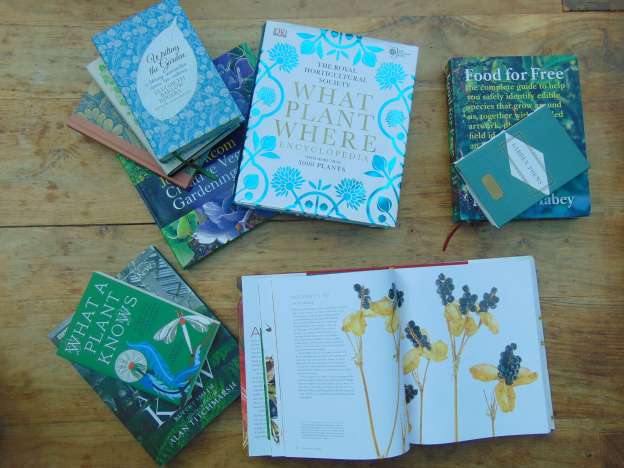
As the weather starts to cool and the days shorten, we look forward to reconvening our Horticulture Book Club…and invite you to join us!

Our book club is a casual, yet serious reading group driven by the interests of our members. We read general interest horticulture books chosen by the members of the group. Our meetings include some lively conversation, an opportunity to make new friends and a snack.

We meet in the living room at Gaiety Hollow, located at 545 Mission Street SE, Salem. Our first meeting will take place on Tuesday, September 10 from 5:30 – 7:00 pm.  We will continue to meet on the second Tuesday of each month through next March, when we head outside once again with our gardening gloves!

No book has been assigned for the September meeting. Hopefully, you have read, or are reading something that you would like to share with the group. Perhaps you found a good read over the summer and could give us a short review.  One member will tell us about The Botany of Desire, a classic she is reading now. We will then discuss which books we want to pursue as a group for both October and November.

If you are interested in joining our Horticulture Book Club, or need more information, please contact Ruth Roberts at rroberts@wvi.com or (503) 581-0774.


Share this:

  • Share on X (Opens in new window) X
  • Share on Facebook (Opens in new window) Facebook
Like Loading...

The Summer Garden at Gaiety Hollow

19 Monday Aug 2019

Posted by Lord & Schryver Conservancy in Uncategorized

≈ Leave a comment

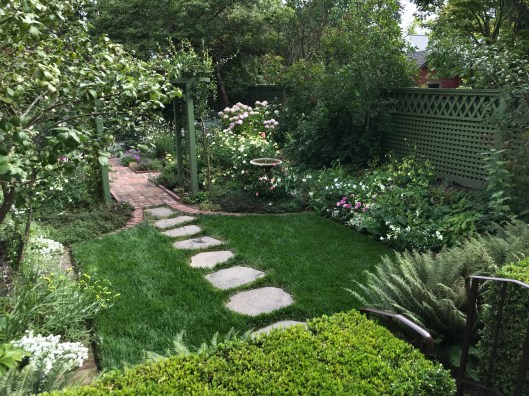
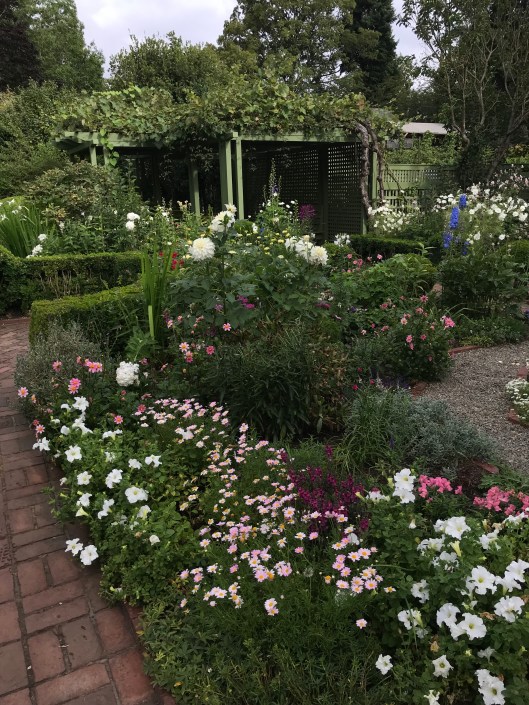
The summer parterre at Gaiety Hollow is blooming away as we head into the middle of August. This being my first summer here, I’ve learned a few lessons that I thought I would share. Lucky for me this has been a pretty mild summer compared to some of the last ones. The increased humidity has led to a few issues with common fungal diseases. I treat powdery mildew by using micronized sulfur dust in a spray solution with an added drop of dish soap which helps the solution adhere to the leaves. Sulfur leaves a thin powdery yellow film, so one must pick his/her battles between treating unsightly mildew and the sulfur residue.  A positive with sulfur is that it is much less toxic than many commonly available garden fungicides.

One lesson learned is how hot and dry the edges of the parterre garden become. The porous bricks not only suck moisture from the planting beds, but also gather heat throughout the day, radiating it at night. This makes it difficult for cooler-loving edging plants like Bellis Daisies to last all summer.  I assume Lord and Schryver would have lifted these plants and placed them in a shady spot in the Reserve Garden for the summer, planting them back out again when the cool weather returned in the fall. We are hoping that restoration of the Reserve Garden this fall will allow us to make that area a more usable space much like it was when the ladies were gardening here.

IMG_2662

The drying garden in mid-August, the exposure of this garden with the large Viburnum makes for an easy to manage bed as it gets a nice afternoon shade respite from the summer sun.

IMG_2661

Heat-loving annuals like Guara, Chinese Asters and African Daisies stand out proudly in the baking hot portions of the Parterre.

IMG_2636

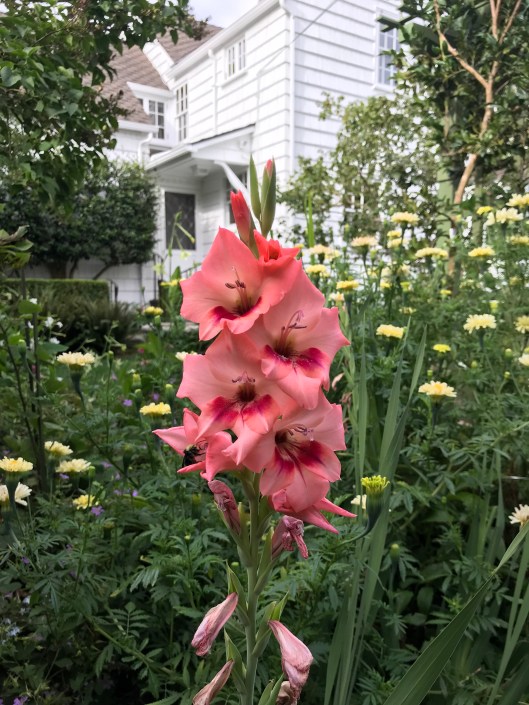
A new introduction to the Parterre this year, the Glamini Gladiolus ‘Lia’ does not require staking.

IMG_2634

A nice rebloom of Delphiniums is coming on as we hit the middle of August.

Share this:

  • Share on X (Opens in new window) X
  • Share on Facebook (Opens in new window) Facebook
Like Loading...
← Older posts
Newer posts →

Enter your email address to follow this blog and receive notifications of new posts by email.

Join 196 other subscribers

Archives

  • December 2022
  • May 2022
  • September 2021
  • June 2021
  • May 2021
  • April 2021
  • March 2021
  • February 2021
  • January 2021
  • December 2020
  • November 2020
  • October 2020
  • September 2020
  • August 2020
  • July 2020
  • June 2020
  • May 2020
  • April 2020
  • March 2020
  • February 2020
  • January 2020
  • December 2019
  • November 2019
  • October 2019
  • September 2019
  • August 2019
  • July 2019
  • June 2019
  • May 2019
  • April 2019
  • January 2018
  • December 2017
  • November 2017
  • October 2017
  • September 2017
  • August 2017
  • July 2017
  • June 2017
  • May 2017
  • April 2017
  • March 2017
  • February 2017
  • January 2017
  • December 2016
  • October 2016
  • September 2016
  • August 2016
  • July 2016
  • June 2016
  • April 2016
  • March 2016
  • February 2016
  • January 2016
  • December 2015
  • November 2015
  • October 2015
  • September 2015
  • August 2015
  • July 2015
  • June 2015
  • May 2015
  • April 2015
  • March 2015
  • February 2015
  • January 2015
  • December 2014
  • November 2014
  • October 2014
  • September 2014
  • August 2014
  • July 2014
  • June 2014
  • May 2014
  • April 2014
  • March 2014
  • February 2014
  • January 2014
  • December 2013
  • November 2013

Categories

Search posts

Blogroll

  • C & R Remodeling
  • Lord and Schryver Conservancy
  • Oregon Heritage
  • The Garden Conservancy
  • WordPress.com News

The Conservancy

  • Lord and Schryver Conservancy

The Garden

  • Lord and Schryver Conservancy

The House

  • Lord and Schryver Conservancy
bonniehull

bonniehull

Bonnie Hull is a painter. Transplanted from the urban mid-west, she works in Oregon's capital city living in a mid-19th century house. Studio, garden, quilting, coffee, preservation, the Oregon art world are among her topics.

View Full Profile →

Recent Posts

  • Winter In The Garden
  • Corrected link: Purchase tickets now
  • A Sneak Peek at the Robertson Garden…#5 on the June Garden Tour!
  • She Got a Makeover
  • (Somewhat) Illicit Plants in the Garden

Recent Comments

andrewluce963's avatarandrewluce963 on The Great Salem Boxwood T…
Diana Colvin's avatarDiana Colvin on A Sneak Peek at the Robertson…
Joyce's avatarJoyce on Winter In The Garden
Marilyn Kingery's avatarMarilyn Kingery on Winter In The Garden
Chet Zenone's avatarChet Zenone on Winter In The Garden

Meta

  • Create account
  • Log in
  • Entries feed
  • Comments feed
  • WordPress.com

Tags

"Documenting the Cultural Landscapes of Women" Aegopodium annuals April archives awards Bill Noble boxwood brick pathways brick restoration Bush House Museum camellias Campanula Clarence Smith Architect compost daphne Deepwood Deepwood Gardens Ellen Biddle Shipman fences flowers forgetmenots Gaiety Hollow Gairty Hollow garden garden benches garden design gardening Garden in winter gardens Garden Tours garden volunteers gates Historic Gardens Historic House and Garden historic photos historic preservation House house remodel hummingbirds January June Lord & Schryver Lord & Schryver Conservancy Lord and Schryver May National Register of Historic Places November Open Garden Oregon peonies pruning pruning boxwood hedges repairing historic garden hardscape repair of wooden garden structures Restoration rhododendrons salem seeds Snow in the Garden Spring spring bulbs spring garden Sprinkler system installation stump removal Summer tree planting trees tulips vintage garden photos Volunteering weeds white oak women landscape architects Zinnias

Blog at WordPress.com.

  • Subscribe Subscribed
    • Lord & Schryver Conservancy blog
    • Join 196 other subscribers
    • Already have a WordPress.com account? Log in now.
    • Lord & Schryver Conservancy blog
    • Subscribe Subscribed
    • Sign up
    • Log in
    • Report this content
    • View site in Reader
    • Manage subscriptions
    • Collapse this bar
 

Loading Comments...
 

    %d